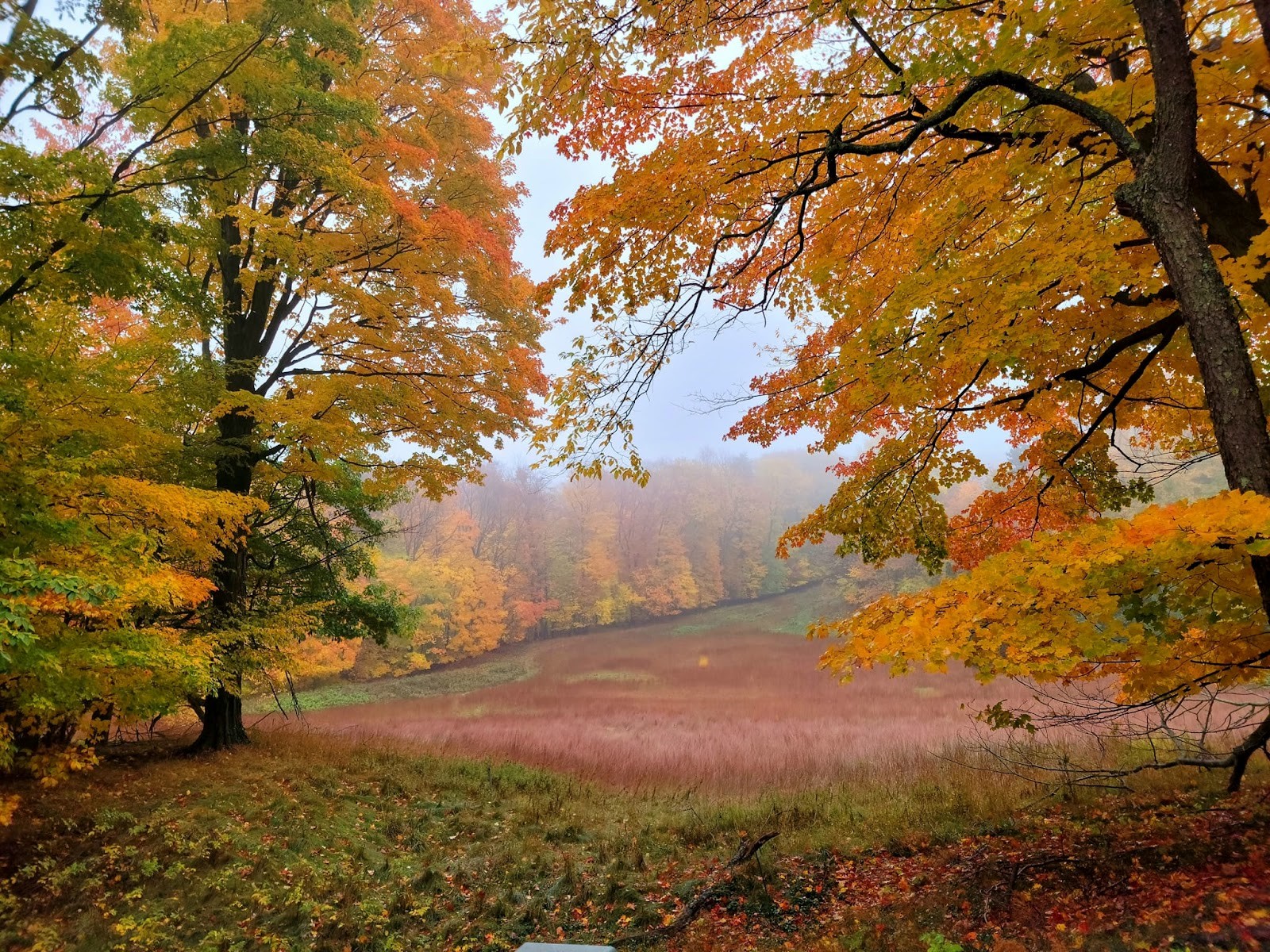
What We Can Do Together

Over the past few months, I've had the chance to talk with many of you about the forest. What you've noticed, what worries you, and what you hope for its future. Those conversations surfaced themes that go beyond ecology alone.

Some concerns were practical: the size of new cottage construction, how long people stay when they visit, and reminders that CSA isn't an HOA and shouldn't operate like one. Others were ecological, touching on invasive species, aging trees, and the disappearance of wildflowers and native groundcover that many of you remember from years past. And some went deeper still, raising questions about whether CSA is drifting from its founding mission, the tension between actively caring for the land and simply leaving it alone, and the real spiritual weight this forest carries for the community.

All of that points to the same conclusion: this isn't just a forest management question; it's a community one. Here's where I think we can start.

On CSA's end, commissioning an updated forest assessment would give us a current baseline to work from, since decisions right now are being made without current data. An organized garlic mustard pull program, with structured community participation rather than scattered individual effort, could make a real dent in that invasive plant's spread. Clear construction guidelines would help protect trees during building projects. And a shared resource for elderly, less-mobile, or extremely busy residents who want to help but can't do physical work themselves would open up participation to more of the community.

There's plenty you can do on your own property too. Avoid pruning oaks between April and July, since that's when oak wilt spreads most easily. Never move firewood from unknown sources, as it's one of the easiest ways to introduce new pests. Take a look at the understory around your cottage and consider whether there's a next generation of trees coming through, or whether it's bare. If you notice unusual tree death or decline, report it and take a photo for the record. And if you spot garlic mustard, pull it and bag it rather than composting it, since composting won't kill the seeds.

The Invasive Plants Creeping In

Not every threat to the forest comes from insects or disease. Some of the most stubborn problems are growing quietly along the forest floor, often from plants that were originally brought in just to make properties look nice.

Garlic Mustard

Garlic Mustard

Garlic mustard's white flowers and heart-shaped leaves

This European herb causes more damage than its size would suggest. It releases chemicals into the soil that harm the fungi native tree seedlings rely on, so it does not just compete with young trees. It interferes with their ability to grow at all. You can spot it by its small white flowers with four petals, heart-shaped leaves with toothed edges, and a faint garlic smell when the leaves are crushed. It is especially hard on sugar maple regeneration. Its seeds can survive in the soil for five years or more, which means missing even one season of removal can undo years of effort.

Japanese Knotweed

Japanese Knotweed

Japanese knotweed's hollow, bamboo-like stems

Once this plant takes hold, it is extremely difficult to remove. It grows into thick stands up to three meters tall, blocking sunlight and preventing native plants from growing underneath. Look for hollow stems that resemble bamboo, broad shovel-shaped leaves, and clusters of small white flowers that appear later in the summer. Even though it looks like it would help hold soil in place, it actually makes erosion worse.

Myrtle

Myrtle is a common ornamental groundcover that often escapes from cottage plantings. It spreads outward to form dense mats along forest edges, with trailing glossy leaves and purple flowers in the spring. That thick cover crowds out everything beneath it, including the native wildflowers that many longtime residents remember seeing here.

Seeing It Firsthand

3 images in a row showing hemlock being treated for wooly adelgid
 

This summer, I spent time working with the Invasive Species Network, helping treat hemlocks and learning how to identify pests up close. In addition to these plants, we found elongated hemlock scale on several trees. It is a different insect than the woolly adelgid, but just as capable of weakening a tree over time. Walking through the forest with people who do this work every day made one thing very clear. The key is catching problems early, before something small like a patch of garlic mustard turns into something much harder to control.


Four Threats Facing Our Trees

For a long time, this forest has held a steady balance. But that balance is starting to shift. Since 1951, our area has warmed by nearly 3 degrees, the frost-free season has stretched by a couple of weeks, and both rainfall and heavy downpours have increased. Those changes may feel subtle day-to-day, but they create conditions where pests and diseases can spread more easily. There are a few in particular that are worth getting to know.
 
Graphic showing rise in average temperature, frost-dree seasons, total precipitation and heavy precipitation intensity over time
Climate trends in our area, 1951–2024
 
Hemlock Woolly Adelgid
This tiny insect targets hemlocks, feeding on their stored nutrients. One of the first things you might notice is a
dusting of small white, wool-like spots at the base of the needles. Over time, the tree begins to thin and fade. Once
infested, hemlocks often don’t recover, usually dying within a decade or so. Birds can unknowingly carry the
insect from tree to tree as they move through the forest.
 
Hemlock Woolly Adelgid
 
 
Beech Bark Disease
 
This one works in stages. A small insect damages the bark, allowing a fungus to move in and take over. Early on, the bark may look pale and crusty. Later, the tree develops dark, oozing wounds and begins to decline. Across Michigan, millions of beech trees have already been lost, and only a small number seem able to resist it.
 
Beech Bark Disease
A beech trunk showing the early signs of beech bark disease
 
Emerald Ash Borer
This beetle has already changed forests across the region. Its larvae burrow beneath the bark of ash trees, cutting off the flow of water and nutrients. You might see small D-shaped holes in the bark or notice the tree thinning from the top down. At CSA, ash loss is already noticeable, and in some parts of Michigan, entire ash populations disappeared within just a few years.

Oak Wilt
Oak wilt moves quickly and can be especially hard to contain. It disrupts the tree’s internal system, and in red oaks, death can come within weeks. Leaves begin to brown from the outer edges inward, often while the veins stay green a little longer. What makes it especially troubling is how it spreads underground, moving through interconnected roots so that one sick tree can quietly affect nearby trees.
These changes don’t happen all at once, and they don’t follow a clear schedule. That’s part of what makes them easy to miss at first. But learning to recognize the signs, even in small ways, can make a real difference in how we respond and care for the forest.

Getting to Know the CSA Forest

If you have walked the trails around Crystal Lake this summer, you have been passing through something more special than it might seem at first glance. This is a climax beech maple forest, meaning it is not a young woodland still changing and competing, but one that has settled into a long-term balance. American beech and sugar maple dominate the canopy, and instead of big dramatic shifts, the forest renews itself slowly, one tree at a time, across generations.

Forests like this stretch from southern New England to eastern Wisconsin, with especially strong roots around Lakes Ontario and Erie. They grow best in fertile, moist, well-drained soils and in places where fire has been uncommon. That makes Benzie County a natural fit. Interestingly, this type of forest has actually become more common since European settlement. Earlier logging and burning reduced hemlock and white pine, leaving space for beech and maple to take over.

Part of what makes this forest so remarkable is its quiet stability. Change tends to happen gently, like when wind opens small gaps in the canopy. These openings let light reach the forest floor, supporting a rich understory of wildflowers and shrubs. In turn, that layered habitat supports a wide range of life, from wood thrush and pileated woodpeckers in the trees to chipmunks and long-tailed weasels on the ground, along with salamanders and tree frogs tucked into the leaf litter.

It is a forest that has sustained itself this way for a very long time. Still, that balance is starting to face new pressures. Insects, disease, and invasive plants are beginning to challenge systems that did not evolve to handle them. Understanding what is here is the first step toward deciding how to care for it.

image001
 

Looking up through the canopy


 Downed trees along the forest edge

Downed trees along the forest edge

New Bylaw Vote is Aug. 1 at Annual Meeting

Final proposal from Community and Belonging Group

By Frances Somers

This summer, the Working Group on Community and Belonging will wrap up its three-year mission to examine diversity, inclusion, and belonging at the Congregational Summer Assembly. The final action will be a vote at the annual meeting, Aug. 1, on a proposed bylaw change regarding who can serve as a trustee.

2026 Bylaw Proposal

The bylaw proposal that members will vote on is an effort, according to Board of Trustees President Bruce Lindsay, to open up board service to a wider audience, specifically those who do not identify as Christians. 

The bylaw currently reads: “All persons elected to the Board of Trustees shall be Members or Associate Members in good standing of the Assembly and shall have demonstrated their willingness to participate in and contribute to the Christian fellowship of the Assembly. 

The proposed change replaces the bolded text above with: “and shall demonstrate a willingness to promote the physical, intellectual, moral, and religious welfare of its constituency.”

The origin of this statement, which was adopted in 1905, can be found on the CSA website and on the first page of every edition of the Assembly News. It states that the purpose of the CSA is to promote the physical, intellectual, moral and spiritual welfare of its members.

Although the Board of Trustees did not take a position on the proposal, Lindsay supports bringing it to the membership because it was a “grass-roots effort.” It should not be a top-down decision from the board, he said.

Formation of the Working Group

First, a little background for anyone new to this topic. During the isolation of the COVID-19 pandemic, a handful of community members began talking about issues of belonging at the CSA. In 2023, the Board of Trustees established the Working Group on Community and Belonging to gauge the experiences of the broader community.

In the summer of 2024, the Working Group hosted nine weekly sessions on “Community and Belonging.” Some 100 participants shared their CSA experiences on diversity and inclusion.

Last summer, the Working Group hosted two conversations on “Values and Vision,” which 42 people attended. These discussions led to a list of shared values, which can be viewed on the CSA website.

The goal was how to describe what we mean when we say “The CSA Way’; what members value about the CSA; and to provide guidance for CSA leaders.

History of the Bylaws

In addition to the group meetings, Chris Sturgis, a trustee and Working Group member, searched the archives for relevant history. She found that the Articles of Incorporation required that two-thirds of the trustees be members of the Congregational church. But as the membership grew, the community expanded to include a mix of Protestant denominations and Catholics, according to Sturgis. She said the CSA modified its bylaws accordingly to reflect the growing diversity.

In 1956 that changed, Sturgis said. It was at that 51-year mark that the CSA initiated formal efforts to create a Christian-only community to maintain “the homogenous character” of its residents. Those efforts started as suggestions that residents sell or rent only to people of Christian heritage.

In the late 1960s, three bylaw changes were voted on and approved that created conditions of eligibility based on religious beliefs, Sturgis said.

  1. Associate members “had to demonstrate their ability and willingness to participate in the Christian fellowship of the Assembly.”
  2. The property bylaw stated that “No application shall be approved unless the applicant is deemed willing and able to participate in and contribute to the Christian fellowship of the Assembly.”
  3. The trustee bylaw also stipulated that trustees had to be willing to “participate in and contribute to the Christian fellowship of the Assembly.”

The Working Group found that while the Associate member bylaw was eliminated at some point, the bylaws regarding property and trustee eligibility remained on the books.

Last summer, members approved an amendment from the Bylaws Committee to remove the property bylaw, and this summer members will vote on a proposal to amend the trustee bylaw.

Concern about Changes

Elaine Walton is co-chairwoman of the Pilgrim Fund, which sustains the CSA’s religious and educational programs. 

When the Working Group began holding meetings, Walton said she started hearing conversations from members who felt it was bringing Diversity, Equity, Inclusion (DEI) politics that were dividing the country into the CSA.  

There was a fear that it was a slippery slope. That there would be an effort to radically change the CSA, especially to dilute or even remove religion entirely.

Speaking for herself and not for the Pilgrim Fund, Walton said she supports the bylaw proposal. “It’s very non-threatening. It does not change the meaning, but it does open the door so that the board doesn’t have to limit itself to who can serve.

“To me, this is about shared values. The CSA needs leaders who share its values and support its mission.”

A Bylaw not Followed

Susan Ratner sees the issue from a unique point of view. Her Protestant roots date to the early 1900s at the CSA. She celebrates that history, but she converted to Judaism before she married, and has since served as a trustee and vice president on the board under the Christian-restrictive bylaw. As a member of the Working Group, she found that the Nominations Committee was unaware of the Christian bylaw and did not use it as a criterion for nominations.

“This is really about cleaning up our bylaws to get them in sync with how our organization is operating,” Ratner said. “Most organizations at a certain point do have to look at their bylaws and bring them up to date with current practices.

“This is not about getting rid of Christianity. It’s meant to make sure though that everyone and anyone who’s interested in leadership and who’s qualified feels welcome to pursue that path.

Ratner added, “I think it’s inevitable that our community had to start talking and thinking about this. The next generation are marrying a diverse group of people. And I think it’s going to be more and more of a challenge for the community whether this (Working) group existed or not.”

Sturgis summed up the Working Group’s bylaw proposal this way:

“Today, as we celebrate our 125th year, we see clearly that clinging to homogeneity isn’t the path to a vibrant CSA. Our community has grown in so many ways — expressions of faith, diversity of backgrounds, who we love and how we live our lives. So we’re proposing updating that bylaw—not to loosen standards or lose who we are, but to strengthen our culture with intentional inclusivity. With a culture of belonging, everyone can bring their whole self. When we invite the full diversity of gifts, care, and insight, we’ll be stronger, more creative, and more responsive. And we can all look forward to renewal happening right here, on the shores of Crystal Lake.”

More information

To learn more about the Working Group on Community and Belonging and its report to the Board of Trustees, check the CSA website here

Lyme Disease, How to Avoid It, and When to Seek Treatment

By Bruce Lindsay, M.D.

From a tick’s perspective the CSA is a target rich environment, and you are one of the targets. The problem is the abundance of deer ticks and the risk of Lyme disease. I contracted Lyme disease at the CSA a few years ago. I recognized it and was treated without any problems. I also saw a few patients at the Cleveland Clinic who had Lyme disease affecting their heart, which is a more difficult problem. There are significant complications that can be avoided if people understand Lyme disease, take measures to avoid it, and know what to do if they are infected. Perhaps my review of this unappetizing topic will help you to avoid a disease that can be debilitating. Be aware that ticks carry other diseases such as Babesiosis (destroys red blood cells), Anaplasmosis (resembles flu symptoms), Alpha-gal Syndrome (triggers severe allergy to red meat and dairy), Powassan Virus (encephalitis), Tick Paralysis, and Rocky Mountain Spotted Fever. Some of these can be very serious or even fatal.

Overview. Lyme disease has spread into the upper Midwest. It is a problem in Benzie County and adjacent counties along the coast of Lake Michigan.1 Recent CDC data show that visits to emergency departments for tick bites are higher than ever in 2026 and Michigan is among the worst states.2 Confirmed reports have nearly tripled in the past 2 years and the CDC estimates that 500,000 people are infected annually in the United States.3 Lyme disease is caused by the bacteria Borrelia burgdorferi, which is transmitted to you by the bloodsucking black legged deer tick Ixodes scapularis, and the risk of Lyme disease increases where deer populations are higher. The deer tick is a “hard tick” with a tough shield on its back. Infected ticks carry the bacteria in their gut and transmit it to you through their saliva when they are feeding. There are several species of ticks, but only the black legged deer tick carries Lyme disease in Michigan. Suffice it to say that we have an abundance of deer and black legged deer ticks at the CSA.  Other species of ticks, including the more common dog tick, do not carry Lyme disease, but they carry other diseases and it is not so easy to tell them apart unless you study the topic.

Life-Cycle. Ticks, which are active in the Spring through Fall, have 3 stages over a life cycle of 2-3 years: larva, nymphs, and adults. Each stage requires a host to provide a single blood meal so they can progress to the next stage. They only feed once at each stage and they are waiting for you.

  1. Eggs hatch in leaf litter, then the larvae (6 legs, about the size of a typed period) find their first host. Larvae are not infected with Lyme disease when they hatch, so they cannot transmit it to you. They quest close to the ground and latch onto mice, birds or other hosts that carry the Lyme disease bacteria and the larvae become infected. They become engorged, drop off, and emerge as 8-legged nymphs the following spring.
  2. Some nymphs are infected from their first host. They limb onto low lying vegetation and ambush the second host – a deer, a dog, or perhaps you. They can detect their new hosts through exhaled CO2, body heat, shadows, odor, and vibration. Children or pets may bring them into the house and share them with you. Once aboard the ticks crawl around your body – often meeting a barrier such as a waistband, skinfolds or the hairline. They commonly attach on the back, thighs, shoulder, or around the hairline, ears, waistline, armpit, and groin. The nymphs are most likely to transmit Lyme disease because they are abundant, and they are tiny and may feed on you for days before they grow large enough to be detected. They are about the size of a poppy seed initially, so you may not notice that you have a hitch-hiker, especially if they are lodged on your back or some other area that is out of sight.4,5 Once engorged with blood the nymphs drop off and will progress to become adults.
  3. Adult ticks carry Lyme disease if previously infected. They tend to climb higher on vegetation while awaiting the 3rd host - primarily deer, which distribute them around the CSA, though you would be a welcome meal too. They eventually become engorged and drop off. Then the females lay about 2,000 eggs in the leaf litter to start the next cycle.

Attachment & Risk. When deer ticks burrow into your skin their secretions have a neurotoxin to prevent pain or itching so you probably won’t feel them, and the saliva forms a biological cement that makes them hard to remove6. Their metabolism is so low that they only breath a few times per minute. Swimming will not kill them because they are able to extract oxygen from water and can survive underwater for up to 15 days.7. They grow larger as they become engorged with blood. Adult ticks are less likely to bite humans and they are more visible, so they are often removed before transmitting the disease. The left image shown below compares the size of the adult (left) and nymph (right) blacklegged deer ticks.8 The right image shows how much larger the nymph becomes as it feeds.

image showing different sizes of ticks scaled against a human finger

Two important factors determine your risk of infection.

  1. First, is the incidence of infected ticks in the area. About 20% of nymphs and 50% of adult ticks are infected in areas that are highly endemic for Lyme disease.6 The incidence may be lower in Benzie County, but it is significant and growing.
  2. Second, time is of the essence. You won’t be infected by a tick that is crawling around look for a good place to lodge. Once they have attached by burrowing into your skin, it takes about 36-48 hours for the bacteria to move from the tick’s gut into their saliva, so a tick that is detected and removed promptly will not infect you with Lyme disease; however, research shows that 50% of infected nymphs transmit the disease by 68 hours of attachment.9,10,11

A tick bite is considered to be high-risk only if it meets the following 3 criteria:5

  1. It was a deer tick
  2. It occurred in a highly endemic area
  3. The tick was attached for ≥ 36 hours.

The reality is that you might not know what kind of tick it was and may have flushed it down the toilet in disgust before it occurred to you to save it and show it to someone who could identify it accurately. The CSA is in a relatively high endemic area. If you think the tick was attached for ≥ 36 hours you should seek medical attention. 

Recognize Lyme Disease. You may wonder how bad is Lyme disease and how do I know I have it? Early infection is heralded by a distinctive rash called erythema migrans in 80% to 90% of cases.5 As shown below, the classic rash is an expanding area of redness about 5-15 cm or more in diameter with a bulls-eye or target pattern: however, there are many variants that look much different.12 The rash may be accompanied by nonspecific symptoms such as headache, fatigue, aching muscles or joints, or neck stiffness. More disseminated disease that affects the nervous system or the heart may occur days to weeks after exposure. There also is a late form predominantly affecting joints that can occur months to 2 years later. If you have had Lyme disease before, it doesn’t prevent you from getting it again.5 The good news is that if Lyme disease is diagnosed and treated promptly most patients do well. 

image showing the distinctive lyme disease rash

Prevention & Removal. Now that you are thoroughly repulsed, let’s focus on how to avoid Lyme disease if you are walking or working outside:

  1. Wear light-colored clothes so ticks that climb aboard will be more easily seen.
  2. If you tuck your pant legs into your socks it helps prevent ticks from gaining access to your skin. You can buy gaiters treated with permethrin that repels or kills ticks on contact. These are not fashion statements, but they are effective.
  3. You can spray permethrin on the outside of your clothes to repel or kill ticks, but do not spray it on your skin.
  4. DEET, picaridin, and oil of lemon eucalyptus are tick repellants that can be applied to skin, but they don’t kill ticks.
  5. Inspect yourself when you come in from the woods or grassy areas. A shower is effective in washing them off before they attach.
  6. Wash your clothes in hot water ( ≥150 degrees F) after working in a high-risk tick zone in case the ticks are clinging to the clothes. Cold or warm water is ineffective. However, 6 minutes in a dryer on high heat will kill them.13
  7. Inspect pets if they have been with you.
  8. Don’t worry about ticks that have not attached to your skin. Just get rid of them and wash your hands.
  9. If you find a tick that has attached, remove it with a set of fine tweezers inserted between the tick body and the skin. Pull gently upward until it is removed. Twisting or jerking is not recommended. Try not to crush the body of the tick. Wash the bite site and your hands after removal. While it is best to remove all mouth parts, sometimes pieces remain in the skin. If not easily retrieved, don’t worry, they will eventually work their way to the surface and probably don’t increase the risk of infection. The risk of disease transmission is greatly reduced even if the tick is inadvertently crushed or squeezed during removal.14There are commercial tools designed to make removal easier, but good technique is more important.11,14,15
  10. Do not try burning the tick or applying noxious chemicals. These methods are not effective and may actually cause the agitated tick to regurgitate more bacteria into your skin.4,14,15
illustration showing proper method for tick removal

Treatment. If you discover a deer tick that you think has been attached for ≥ 36 hours with no signs or symptoms, a single dose of doxycycline reduces the risk of Lyme disease16, so you should discuss that with your doctor. If you have already developed the rash, then you have the disease and you should seek medical attention before it spreads. Blood tests are not accurate early in the disease, so it is a clinical diagnosis. If you saved the tick, transport it in alcohol for inspection to see if it was a deer tick. Several antibiotics with a treatment duration of 7-14 days are very effective.4,5 Treatment of disseminated Lyme disease that affects the central nervous system, the heart, or joints is beyond the scope of this discussion.

Pets: Dogs and cats are susceptible to many of the same tick-borne diseases that affect humans, so take precautions.17 Tick and flea collars, repellant powders, oral medications, and canine vaccination for Lyme disease are effective measures to repel or kill ticks that you can discuss with your veterinarian.  However, these treatments do not necessarily prevent your pet from bringing ticks into the house. It is not clear that pet owners have a higher risk of Lyme disease, but they are more likely to find ticks on their bodies either because they joined their pets for a walk in the woods or the ticks transferred from the pets to the owners.18 So don’t forget to check your furry friends for ticks. Then check yourself.

References

  1. Eisen L, Eisen RJ. Changes in the geographic distribution of the blacklegged tick, Ixodes scapularis, in the United Sates. Ticks and Tick-borne Diseases. 2023;14: https://doi.org/10.1016/j.ttbdis.2023.102233
  2. Tick Bite Data Tracker. https://www.cdc.gov/ticks/data-research/facts-stats/tick-bite-data-tracker.html
  3. Fish D. Getting Serious about tickborne diseases – Shifting research priorities. New Engl J Med 2026:394:1917-1973.
  4. Smith RP. Lyme Disease. Annals of Internal Medicine. 2025; volume 178, Number 5 https://doi.org/10.7326/ANNALS-25-0111
  5. Lantos PM, Rumbaugh J, Bockenstedt LK, et al. Clinical Practice guidelines by the Infectious Diseases Society of America (IDSA), American Academy of Neurology (AAN), and American College of Rheumatology (ACR): 2020 Guidelines for the Prevention, Diagnosis, and Treatment of Lyme Disease. Clin Infect Dis. 2021 Jan 23;72(1): e1-e48.
  6. Anderson JF, Magnarelli LA. Biology of Ticks. Infect Dis Clin N Am. 2008;22:195-215.
  7. Fielden LJ, Knohoff LM, Villarreal SM, Ryan P. Underwater survival in the dog tick Dermacenter variabilis (Acari:Ixodidae). J Insect Physiology.2011;57:21-26.
  8. Morse J. Report to the Boards of Health. Ticks. June 2025. https://www.mmdhd.org/wp-content/uploads/2025/06/F.-1.-MD-BOH-report-June-2025-ticks.pdf
  9. Des Vignes F, Piesman J, Hefferman R, et al. Effect of tick removal on transmission of Borrelia burgdorferi and Ehrlichia phagocytophilia by Ixodes scapularis nymphs. J Infect Dis. 2001;183:773-778.
  10. Piesman J, Maupin GO, Campos EG, Happ CM. Duration of adult female Ixodes dammini attachment and transmission of Borrelia burgdorferi, with description of a needle aspiration isolation method. J Infect Dis 1991; 163:895–7.
  11. Piesman J, Dolan MC. Protection against Lyme disease spirochete transmission provided by prompt removal of nymphal Ixodes scapularis (Acari: Ixodidae). J Med Entomol. 2002;30:509-12.
  12. Nadelman RB. Erythema Migrans. Infect Dis Clin N Am 2015;29:211-239
  13. Nelson CA, Hayes CM, Markowitz MA, et al. The heat is on: Killing blacklegged ticks in residential washers and dryers to prevent tickborne disease. Ticks and Tick-borne Diseases. 2016:7:958-963.
  14. Needham GR. Evaluation of five popular methos for tick removal. Pediatrics 1885;75:997-1002.
  15. Duscher GG, Peschke R, Tichy A. Mechanical tools for the removal of Ixodes ricinus female ticks – differences of instruments and pulling or twisting. Parasitol Res 2012;111:1505-1511.
  16. Nadelman RB, Nowakowski J, Fish D, et al for the Tick Bite Study Group. Prophylaxis with single-dose doxycycline for the prevention of Lyme disease after an Ixodes scapularis bite. New Engl J Med. 2001;345:79-84.
  17. Berrada ZL, Telford SR III. Burden of Tick-borne infections on American Companion Animals. Top Companion Anim Med. 2009;24:175-181.
  18. Jones EH, Hinkley AF, Hook SA, et al. Pet ownership increase human risk of encountering ticks. Zoonoses Public Health 2018;65:74-79.
Page 1 of 4